
General mode
General mode is the starting point for checking familiar objects and living things. The API image-recognition domain accepts general mode, and backend processing connects it to image analysis.
Features
KORENANI is a children's image-recognition learning app for learning object names from photos. This page introduces recognition modes, text-to-speech, child profiles, stored data areas, and quiz-connected learning areas.
Recognition
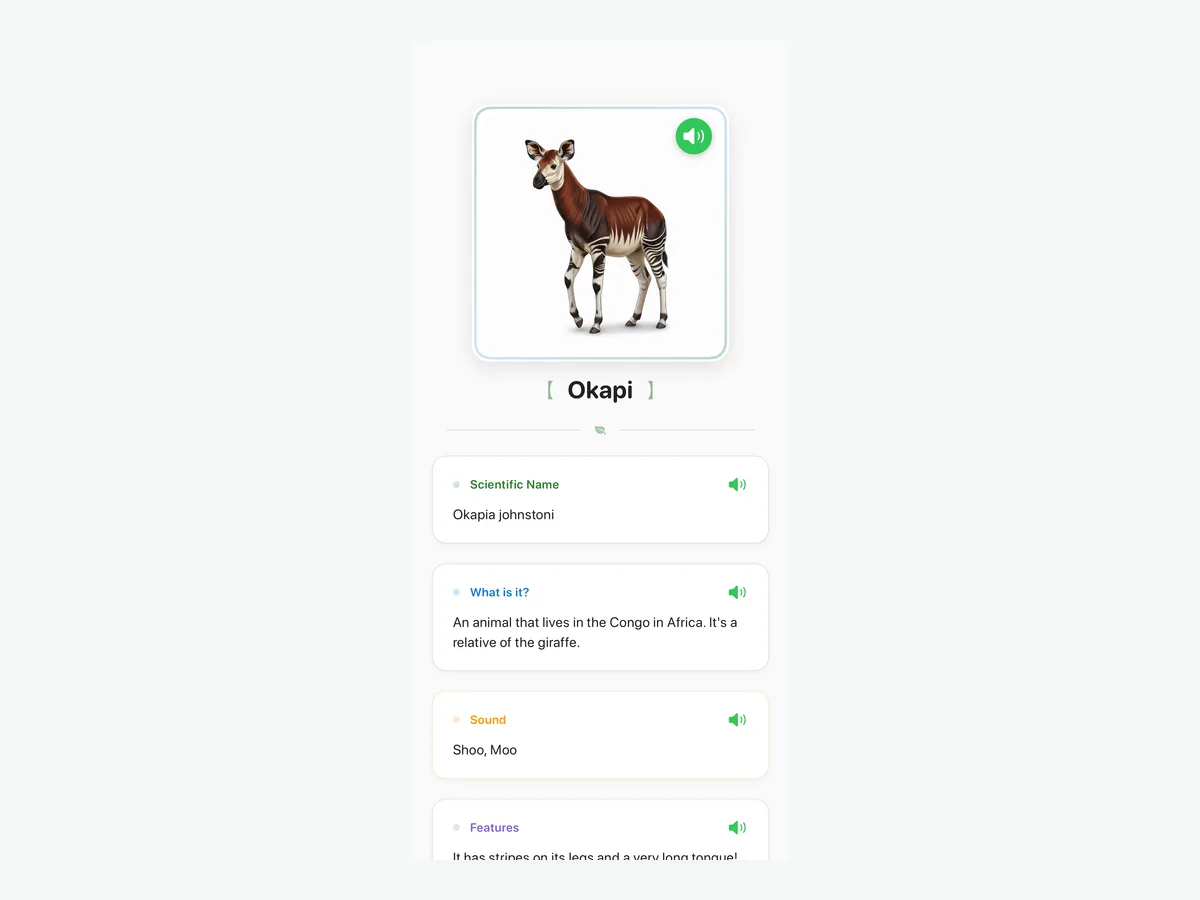
The image-recognition modes are general, plant, and insect. General recognition connects to image analysis, plant recognition connects to plant identification, and insect recognition connects to insect identification. The learning experience starts with a photo and continues through names, details, and audio.
General mode is the starting point for checking familiar objects and living things. The API image-recognition domain accepts general mode, and backend processing connects it to image analysis.
Plant mode sends plant images to plant-identification processing. It separates plant learning from the broader general mode.
Insect mode sends insect images to insect-identification processing. It helps families review insects a child has observed.
KORENANI generates audio for recognized-object labels and details. The iOS and API language definitions include text-to-speech related settings for Japanese, English, Spanish, French, German, Italian, Portuguese, Chinese, and Korean.
The backend areas include authentication, child profile management, image storage and recognition results, tags, billing, and quiz. Stored data models include users, child profiles, image paths, recognition results, experience logs, and quiz sessions.
Stored records include child-specific image paths, recognized objects, language-specific labels, metadata, and custom audio bucket or path fields. Photos are sent to the API for recognition processing, and recognition results with related data are handled in the app areas.
Saved recognition results can connect back into quiz-based learning. KORENANI handles quiz sessions, answers, correctness, response time, and recognized-object mastery records.